Why You Should Never Pour Cooking Oil Down the Drain
A Common Kitchen Habit That Causes Serious Problems
Pouring leftover cooking oil into the kitchen sink may seem like a quick and harmless way to clean up after cooking, but this common habit can create serious problems for your plumbing and the environment. When Used Cooking Oil enters a Kitchen Sink Drain, it does not simply wash away with water. Instead, it travels through your Plumbing System and eventually reaches the Municipal Sewer System, where it can contribute to major blockages and infrastructure damage.
Cooking oil behaves very differently from water. Once it cools, it begins to thicken and stick to pipe surfaces, gradually forming layers of grease that restrict water flow. Over time, this buildup can lead to clogged pipes, slow drainage, and costly plumbing repairs. On a larger scale, when thousands of households dispose of oil in the same way, it creates severe problems for Wastewater Treatment Plant operations and public sanitation systems.
Understanding why oil should never be poured down the drain is the first step toward protecting your home plumbing, preventing sewer blockages, and supporting responsible kitchen waste management.
What Happens When Cooking Oil Goes Down the Drain?
Oil Does Not Mix With Water
Cooking oil and water do not mix because oil is a hydrophobic substance. When Used Cooking Oil is poured into the sink, it initially appears to flow away with the water. However, instead of dissolving, the oil separates and floats within the wastewater stream.
In plumbing and wastewater management, this category of waste is known as Fats, Oils, and Grease (FOG). These substances are known for sticking to pipe surfaces and accumulating over time. As the oil moves through household pipes and sewer lines, it gradually coats the interior walls of the pipes with a thin, greasy layer.
This early stage of grease buildup often goes unnoticed, but it sets the foundation for much larger plumbing problems later.
Oil Solidifies and Creates Pipe Blockages
Hot cooking oil may appear liquid when it is poured down the drain, but it quickly cools once it enters the plumbing system. As the temperature drops, the oil begins to thicken and solidify, forming sticky deposits inside the pipes.
These grease deposits gradually accumulate along the walls of Sewer Pipes, reducing the effective diameter of the pipe. As the buildup grows thicker, water flow becomes restricted, which can lead to slow drains and recurring blockages in kitchen sinks.
Unlike food scraps that may eventually break down, hardened grease tends to remain inside the pipes for long periods. Over time, this accumulation can become dense enough to completely obstruct sections of the drainage system.
How Grease Combines With Other Waste
Grease buildup becomes even more problematic when it combines with other materials that travel through household drains. Food particles, soap residue, and organic debris can easily stick to greasy surfaces inside pipes.
As these materials accumulate together, they form dense masses that are difficult to remove without professional plumbing equipment. This compound buildup can spread through multiple sections of the plumbing network, affecting both household drainage and larger sewer infrastructure.
When this grease-rich waste enters the broader Municipal Sewer System, it contributes to widespread blockages that cities must regularly remove to keep wastewater systems functioning properly.
The Hidden Damage to Home Plumbing Systems
Slow Drains and Kitchen Sink Backups
One of the first signs of grease buildup in household plumbing is a slow-draining sink. When Used Cooking Oil repeatedly enters the Kitchen Sink Drain, it gradually coats the interior walls of the pipes with sticky grease deposits.
Over time, these deposits reduce the internal space available for water to flow through the pipes. As the pipe diameter becomes narrower, wastewater begins to drain more slowly, causing standing water in the sink after washing dishes.
In more severe cases, the accumulated grease can cause complete drainage failure. This may lead to sink backups where wastewater returns through the drain instead of flowing into the Sewer Pipes. What begins as a small kitchen habit can quickly turn into a frustrating plumbing issue for homeowners.
Expensive Plumbing Repairs
Grease-related pipe blockages often require professional intervention to resolve. When hardened oil buildup forms deep inside the Plumbing System, simple household solutions like plungers or drain cleaners are rarely effective.
Professional plumbers typically use specialized equipment such as mechanical drain augers or high-pressure hydro-jetting systems to break apart grease deposits and restore water flow. These services can become costly, especially if the blockage has spread across multiple sections of the plumbing network.
In some cases, severe grease buildup may even require sections of damaged piping to be removed and replaced. What initially seems like a minor disposal habit can therefore lead to significant repair expenses for homeowners.
Long-Term Damage to Household Plumbing
Beyond immediate drain clogs, repeated oil disposal can cause long-term damage to residential plumbing infrastructure. As layers of grease continue to accumulate inside pipes, they trap additional debris such as food scraps and soap residue.
This combination of materials forms dense blockages that place constant pressure on pipe joints and drainage systems. Over time, the stress created by restricted water flow can contribute to leaks, pipe deterioration, and structural damage within the plumbing network.
Preventing this type of damage is far easier than repairing it. Avoiding the disposal of cooking oil in sinks helps maintain a clean and efficient Plumbing System, reducing the risk of costly plumbing failures in the future.
How Used Cooking Oil Affects City Sewer Systems
Grease Buildup in Municipal Sewers
Improper disposal of Used Cooking Oil does not only damage household plumbing—it also creates serious challenges for public wastewater infrastructure. After oil travels through home pipes, it eventually enters the Municipal Sewer System, a complex network designed to transport wastewater safely to treatment facilities.
Inside these large sewer pipelines, fats, oils, and grease continue to behave in the same way they do in household pipes. As wastewater flows through the system, grease begins to stick to the interior surfaces of the pipes, gradually forming thick deposits along the pipeline walls.
When grease accumulation grows over time, it restricts the movement of wastewater through the sewer network. These blockages can disrupt the normal operation of urban drainage systems and increase the likelihood of sewer overflows, which pose sanitation and environmental risks in populated areas.
The Problem of Fatbergs
One of the most severe consequences of grease disposal in sewer systems is the formation of Fatberg structures. A fatberg is a massive solid blockage that forms when grease combines with non-biodegradable waste such as wipes, paper products, and plastic debris.
As these materials accumulate together inside the sewer network, they gradually harden into large, rock-like masses. Some fatbergs discovered in major cities have weighed several tons and required extensive removal efforts by municipal maintenance crews.
These blockages can completely obstruct wastewater pipelines, preventing sewage from reaching treatment facilities. When this occurs, wastewater may back up into streets, basements, or public drainage systems, creating serious public health hazards.
Increased Costs for Wastewater Treatment Plants
Grease contamination also creates operational challenges for Wastewater Treatment Plant facilities. These plants are designed to process wastewater efficiently, but excessive grease in the system can interfere with filtration equipment, pumps, and biological treatment processes.
When large quantities of grease enter treatment systems, facility operators must invest additional time, labor, and equipment to remove it. This increases maintenance costs and reduces the overall efficiency of wastewater treatment operations.
Since municipal wastewater systems are funded through public infrastructure budgets, these increased costs ultimately affect communities through higher maintenance expenses and resource allocation for sewer management.
Environmental Consequences of Improper Oil Disposal
Water Pollution Risks
Improper disposal of Used Cooking Oil can contribute to serious Water Pollution when grease escapes from sewer systems and enters natural waterways. Although municipal wastewater systems are designed to manage household waste, excessive amounts of fats, oils, and grease can overwhelm treatment processes or contribute to sewer overflows.
When this happens, contaminated wastewater may reach rivers, lakes, and coastal areas. Cooking oil forms a thin film on the surface of water that can interfere with natural oxygen exchange between the air and the water. This disruption reduces the amount of dissolved oxygen available in aquatic environments, which is essential for the survival of many organisms.
Preventing oil from entering drainage systems is therefore an important step in protecting local water quality and maintaining healthy ecosystems.
Damage to Aquatic Life
Oil contamination can have harmful effects on organisms living within an Aquatic Ecosystem. When oil accumulates on the surface of water bodies, it creates a barrier that limits oxygen transfer and blocks sunlight from reaching underwater plants and algae.
Reduced oxygen levels can stress fish, invertebrates, and other aquatic organisms that rely on stable environmental conditions. In addition, oily residues can coat the gills and outer surfaces of aquatic animals, interfering with normal biological functions.
Although a single household may dispose of only a small amount of oil, the combined impact of thousands of homes and commercial kitchens can significantly increase environmental pressure on rivers, lakes, and coastal ecosystems.
Increased Environmental Waste
Improper oil disposal also contributes to broader environmental challenges related to waste management and resource sustainability. Instead of being treated as a valuable recyclable resource, large quantities of Used Cooking Oil are lost in the wastewater stream.
When properly collected and processed, used cooking oil can be converted into Biodiesel, a cleaner-burning alternative fuel that supports Renewable Fuel production. Recycling cooking oil therefore not only prevents pollution but also helps transform kitchen waste into a useful energy resource.
Encouraging responsible oil disposal practices can reduce environmental pollution while supporting more sustainable waste management systems.
The Correct Way to Dispose of Used Cooking Oil
Let the Oil Cool and Store It Safely
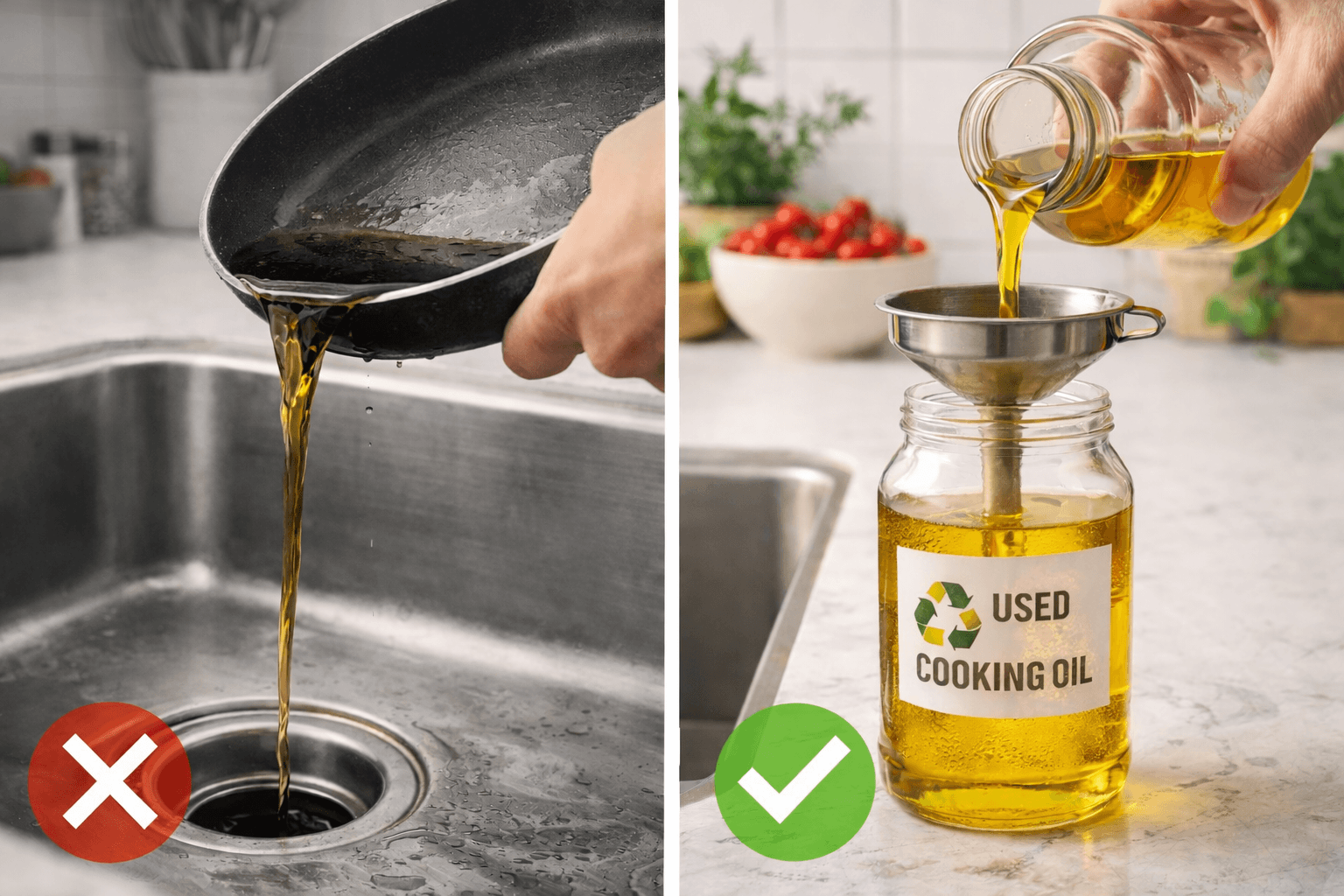
The safest way to handle leftover Used Cooking Oil at home is to allow it to cool completely before disposing of it. Hot oil should never be poured directly into the Kitchen Sink Drain, as it can travel through the pipes in liquid form before solidifying deeper inside the Plumbing System.
Once the oil has cooled, it can be transferred into a sealed container such as an empty bottle, jar, or food-safe storage container. Keeping the oil contained prevents it from entering the drainage system and helps ensure it can be disposed of responsibly.
This simple kitchen practice significantly reduces the risk of grease buildup in household pipes and protects the drainage system from long-term damage.
Recycle Used Cooking Oil
Instead of treating cooking oil as waste, many communities encourage recycling programs that convert Used Cooking Oil into Biodiesel. Through specialized processing methods, used oil can be transformed into a cleaner-burning Renewable Fuel that helps reduce dependence on fossil fuels.
This process, known as Used Cooking Oil Recycling, allows households and businesses to contribute to sustainable waste management while preventing grease from entering sewer systems.
Many municipalities and recycling organizations provide designated collection points where residents can safely drop off used cooking oil for recycling. Participating in these programs helps convert kitchen waste into a valuable energy resource.
Use Professional Cooking Oil Collection Services (For Restaurants)
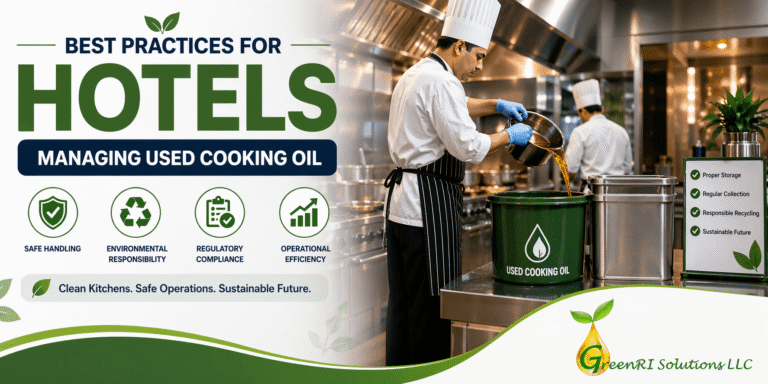
Commercial kitchens and food service businesses generate significantly larger volumes of cooking oil compared to households. For this reason, restaurants and food production facilities often rely on professional Cooking Oil Collection Service providers to manage oil disposal safely.
These services collect and transport used oil from Commercial Kitchen operations to specialized recycling facilities where it can be processed into biodiesel or other industrial products.
In addition, many commercial kitchens install equipment such as Grease Trap systems to capture fats, oils, and grease before they enter the plumbing network. This equipment helps prevent grease buildup in drainage systems and ensures compliance with local wastewater regulations.
Small Kitchen Habits That Prevent Big Plumbing Problems
Wipe Greasy Pans Before Washing
One of the easiest ways to prevent grease buildup in your plumbing system is to remove excess oil from cookware before placing it in the sink. After cooking, pans and utensils often contain small amounts of Used Cooking Oil that can easily enter the Kitchen Sink Drain during washing.
Instead of rinsing oily cookware directly under running water, wipe the surfaces with a paper towel or disposable cloth first. This simple step removes most of the grease and prevents it from entering the Plumbing System. By reducing the amount of oil that reaches the drain, you significantly lower the risk of pipe buildup and future drainage problems.
Install Grease Traps in Commercial Kitchens
For restaurants and large food preparation facilities, managing fats, oils, and grease requires specialized equipment. Many Commercial Kitchen operations install Grease Trap systems designed to capture grease before it enters the wastewater pipeline.
A grease trap works by slowing down the flow of wastewater and allowing oils and grease to float to the surface while heavier food particles settle at the bottom. This separation process prevents Fats, Oils, and Grease (FOG) from traveling into the Municipal Sewer System, where they could contribute to major blockages.
Regular cleaning and maintenance of grease traps are essential for keeping commercial plumbing systems efficient and compliant with local wastewater regulations.
Educate Household Members and Kitchen Staff
Preventing grease-related plumbing issues often comes down to awareness and daily habits. Many people simply do not realize the long-term impact that pouring cooking oil down the drain can have on plumbing systems and public wastewater infrastructure.
Educating family members, kitchen staff, or employees about proper oil disposal practices helps create consistent habits that protect both private plumbing and city sewer systems. When people understand that Used Cooking Oil can contribute to sewer blockages, Fatberg formation, and Water Pollution, they are far more likely to adopt responsible disposal methods.
Simple awareness can therefore play a powerful role in preventing costly plumbing repairs and protecting the environment.
Responsible Oil Disposal Protects Plumbing and the Environment
Pouring cooking oil down the drain may seem convenient, but it can lead to a chain reaction of problems that affect household plumbing, municipal sewer infrastructure, and natural ecosystems. As Used Cooking Oil travels through pipes, it cools, thickens, and sticks to surfaces, gradually forming grease deposits that restrict water flow and create stubborn blockages.
When these materials accumulate in the Municipal Sewer System, they can combine with other waste to form massive obstructions known as Fatberg structures. These blockages increase maintenance costs for Wastewater Treatment Plant operations and contribute to broader sanitation challenges in urban areas.
The good news is that preventing these problems is simple. By storing leftover oil in sealed containers, participating in Used Cooking Oil Recycling, and adopting small kitchen habits that reduce grease disposal, households and businesses can protect their plumbing systems while supporting environmental sustainability.
Responsible cooking oil management not only prevents plumbing damage but also allows waste oil to be recycled into valuable resources such as Biodiesel, turning a common kitchen byproduct into a cleaner energy solution.
Turn Used Cooking Oil into a Sustainable Resource
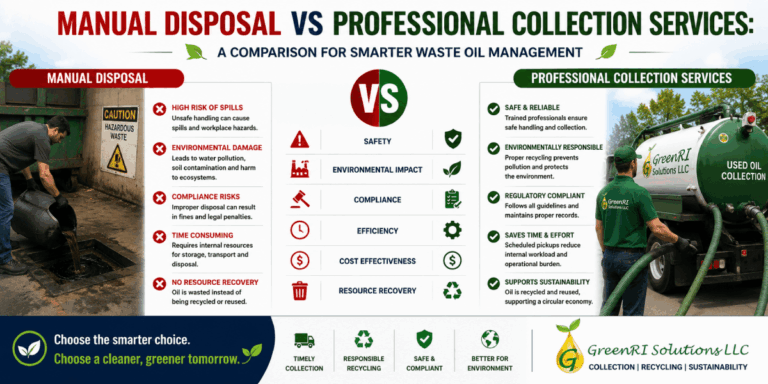
Improper disposal of Used Cooking Oil doesn’t just harm plumbing and sewer systems—it also wastes a valuable recyclable resource. Instead of pouring oil down the drain, restaurants and commercial kitchens can partner with professional collection and recycling providers that transform waste oil into environmentally responsible products such as Biodiesel.
GreenRi Solutions LLC helps businesses manage used cooking oil safely and sustainably through reliable oil collection, recycling, and waste management services. By working with an experienced partner, restaurants and food service operations can prevent grease-related plumbing problems, stay compliant with waste regulations, and contribute to cleaner energy production.
If your kitchen generates used cooking oil regularly, consider partnering with GreenRi Solutions LLC to ensure responsible disposal and turn waste oil into a valuable renewable resource. Reach out today to learn more about their cooking oil recycling and collection services.