Manual Disposal vs Professional Oil Collection Services: A Comparison
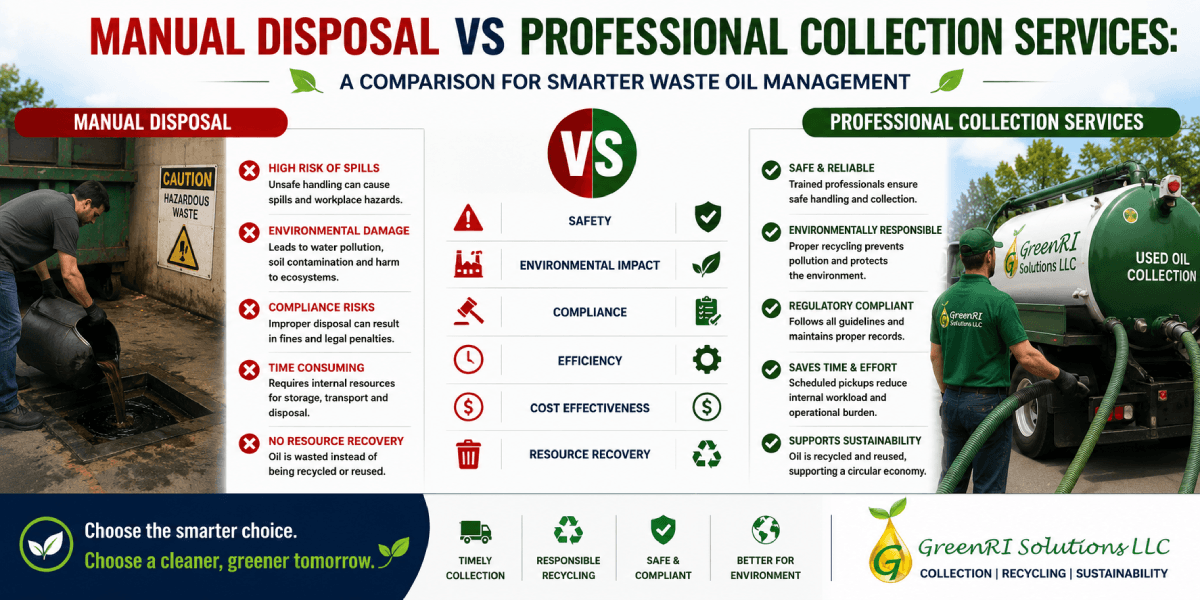
Understanding the Difference Between Manual Disposal and Professional Waste Oil Collection
Businesses that generate used cooking oil, used engine oil, or industrial oil waste must decide how to manage it responsibly. While some businesses attempt to handle disposal internally, others rely on professional collection and recycling services to streamline the process.
At first glance, manual disposal may appear to be a simple and cost-effective option. However, when considering safety, compliance, operational efficiency, and environmental responsibility, professional collection services often provide significant long-term advantages.
Understanding the differences between these two approaches can help businesses make more informed waste management decisions.
What is Manual Disposal?
Manual disposal refers to handling and disposing of waste oil internally without the support of a professional collection service.
This may involve:
Many small businesses initially choose this approach to avoid outsourcing waste management.
What are Professional Collection Services?
Professional collection services involve scheduled waste oil pickup, transportation, and recycling handled by specialized providers.
These services typically include:
Professional systems help businesses simplify operational waste management while reducing environmental risks.
Comparing Safety and Workplace Risks
Manual Disposal Increases Operational Risks
Handling oil internally often increases the risk of:
Improper handling can create unsafe working environments, especially in high-volume operations.
Professional Collection Improves Safety Standards
Professional collection systems help reduce:
Routine collection also helps maintain cleaner and safer operational areas.
Environmental Impact Comparison
Manual Disposal Often Leads to Pollution Risks
Without proper systems in place, manual disposal may result in:
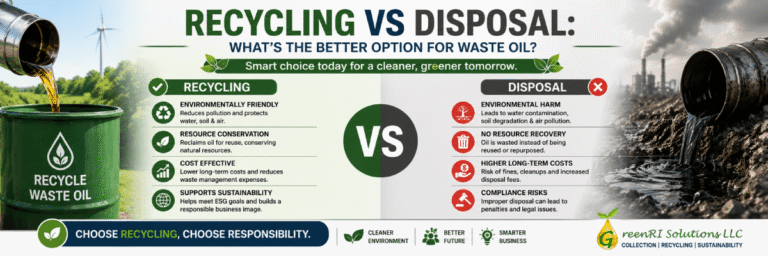
Improper disposal contributes directly to Water Pollution and broader environmental damage.
Professional Collection Supports Responsible Recycling
Professional services focus on structured recycling and environmentally responsible processing.
Collected oil can often be:
This supports sustainable Waste Management practices and reduces environmental impact.
Compliance and Regulatory Considerations
Manual Disposal Can Create Compliance Challenges
Businesses managing oil waste independently may struggle with:
Improper disposal practices can lead to:
Professional Collection Simplifies Compliance
Professional collection services help businesses maintain:
This makes it easier to maintain compliance standards and reduce operational risks.
Operational Efficiency Comparison
Manual Disposal Requires Internal Resources
Businesses handling waste oil independently often need to dedicate:
This can distract teams from core business operations.
Professional Collection Streamlines Operations
Scheduled collection services reduce operational burden by:
Businesses can focus more effectively on daily operations.
Long-Term Cost Considerations
Manual Disposal May Create Hidden Costs
Although manual disposal may appear less expensive initially, hidden costs often include:
Over time, these costs can become substantial.
Professional Services Provide Better Long-Term Value
Professional collection services help reduce:
A structured system often leads to more predictable and manageable waste management processes.
Industries That Benefit Most from Professional Collection Services
Restaurants and Commercial Kitchens
Frequent oil generation from frying operations requires consistent and organized collection systems.
Hotels and Hospitality Businesses
Hotels benefit from professional collection by improving kitchen cleanliness, safety, and waste handling efficiency.
Automotive Workshops
Garages and repair facilities generating used engine oil require reliable and compliant collection processes.
Food Processing Facilities
Large-scale operations generating continuous oil waste benefit from scheduled and scalable collection systems.
Why Recycling is Better Than Simple Disposal
Professional collection services typically prioritize recycling rather than simple disposal.
Recycling supports the principles of a Circular Economy, where materials are reused instead of discarded.
This helps:
Businesses adopting recycling-focused systems contribute to cleaner and more sustainable operations.
Best Practices for Businesses Managing Waste Oil
Use Proper Storage Containers
Schedule Routine Collection
Consistent collection prevents:
Train Staff on Safe Handling
Employees should understand:
Work with Reliable Collection Providers
Professional waste oil management services simplify operations while improving safety and sustainability.
Which Option is Better for Businesses?
While manual disposal may seem manageable for smaller operations, professional collection services provide clear advantages in:
For businesses generating oil waste regularly, professional collection is often the more reliable and scalable solution.
Encouragement to Explore Smarter Waste Oil Management
Efficient waste oil management is essential for maintaining cleaner, safer, and more sustainable operations.
Businesses that transition from manual disposal methods to structured collection systems often experience improved operational efficiency, reduced risks, and stronger environmental performance.
Simplify Waste Oil Management with GreenRI Solutions LLC
Managing waste oil internally can become time-consuming, risky, and difficult to scale as operations grow.
With GreenRI Solutions LLC, businesses can move beyond manual disposal methods and implement a more efficient and environmentally responsible solution.
Our professional collection services help businesses:
Whether you operate a restaurant, hotel, automotive workshop, or industrial facility, GreenRI Solutions LLC provides reliable collection and recycling solutions tailored to your operational needs.
Connect with GreenRI Solutions LLC today to build a smarter, safer, and more sustainable waste oil management system.