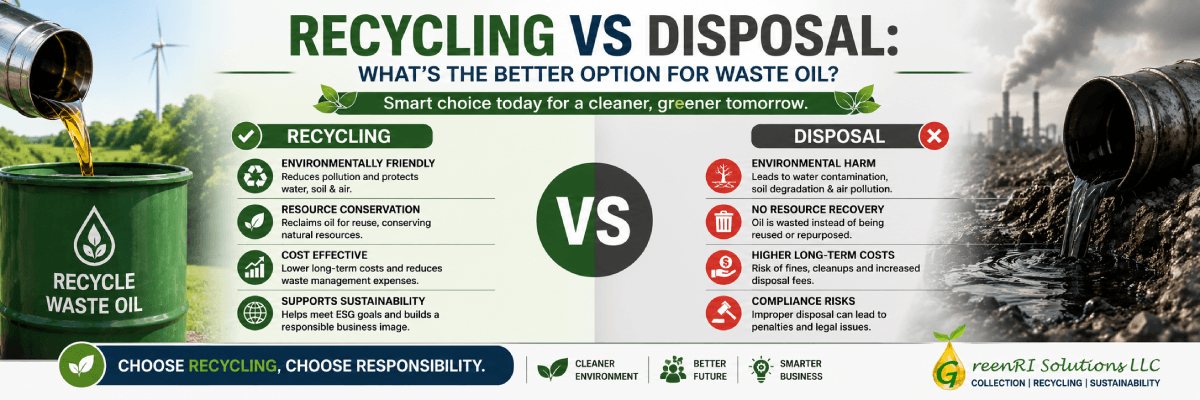
Recycling vs Disposal: What’s the Better Option for Waste Oil?
Understanding the Difference Between Waste Oil Recycling and Disposal
Every day, businesses such as restaurants, hotels, automotive workshops, food processing units, and industrial facilities generate significant amounts of waste oil. Once oil reaches the end of its usable life, businesses are faced with an important question:
Should the oil simply be disposed of, or should it be recycled?
While both approaches involve removing waste oil from operations, the environmental, operational, and long-term impacts are very different. Understanding the difference between recycling and disposal can help businesses make smarter and more sustainable decisions.
What is Waste Oil Disposal?
Waste oil disposal refers to the process of discarding used oil after it can no longer be utilized in its original application.
Improper disposal methods may include:
Even regulated disposal methods typically focus only on removing the waste rather than recovering its value.
What is Waste Oil Recycling?
Waste oil recycling involves collecting and processing used oil so it can be reused in other applications.
Depending on the type of oil, recycling may include:
This approach supports sustainable Waste Management practices and reduces environmental impact.
Environmental Impact: Recycling vs Disposal
Disposal Often Increases Pollution Risks
Improper or inefficient disposal can contribute to:
Waste oil that enters waterways contributes directly to Water Pollution, harming aquatic ecosystems and public water systems.
Disposal-focused systems may also require additional environmental treatment processes, increasing resource consumption.
Recycling Helps Reduce Environmental Damage
Recycling keeps waste oil out of:
By recovering and reusing oil, businesses reduce waste generation and support cleaner environmental practices.
Recycling also contributes to reducing overall Carbon Footprint by minimizing resource extraction and waste-related emissions.
Resource Recovery: Why Recycling Offers More Value
Disposal Ends the Lifecycle of Oil
In most disposal systems, the oil is treated purely as waste. Once discarded, its potential value is lost completely.
This creates:
Recycling Extends the Lifecycle of Oil
Recycling transforms used oil into a reusable resource.
This supports the principles of a Circular Economy, where materials remain in productive use for as long as possible.
Recovered oil can often be:
Cost and Operational Considerations
Disposal Can Increase Long-Term Costs
Improper disposal practices may lead to:
Businesses may also face reputational damage if waste handling practices are viewed negatively.
Recycling Supports Efficient Operations
Structured recycling systems can help businesses:
Regular collection and organized handling also help maintain cleaner and safer operational environments.
Compliance and Sustainability Benefits
Growing Environmental Expectations
Many industries are under increasing pressure to improve sustainability practices and reduce environmental impact.
Customers, regulators, and stakeholders increasingly value businesses that implement responsible recycling systems.
Recycling Supports ESG and Sustainability Goals
Oil recycling helps businesses strengthen:
This is especially important for businesses focused on corporate sustainability and ESG performance.
Industries That Benefit Most from Oil Recycling
Restaurants and Commercial Kitchens
Used cooking oil from fryers and kitchen operations can be efficiently collected and recycled into renewable applications.
Hotels and Hospitality Operations
Hotels generating large volumes of cooking oil benefit from organized collection systems that improve cleanliness and operational efficiency.
Automotive Workshops
Used engine oil and lubricants generated by garages and repair facilities require controlled handling and environmentally responsible recycling.
Food Processing Facilities
Large-scale production operations often generate continuous oil waste streams that can be managed more efficiently through structured recycling systems.
Best Practices for Businesses Managing Waste Oil
Store Oil Properly
Avoid Mixing Waste Streams
Keep used oil separate from:
Schedule Routine Collection
Regular collection helps:
Work with Professional Recycling Providers
Partnering with experienced recycling services ensures waste oil is handled responsibly from collection to processing.
Which Option is Better: Recycling or Disposal?
While disposal may seem like a simpler short-term solution, recycling provides far greater long-term value for businesses and the environment.
Recycling helps:
For businesses focused on responsible waste management, recycling is typically the smarter and more sustainable choice.
Smarter Waste Oil Solutions
Efficient oil management is no longer just about removing waste—it is about creating safer, cleaner, and more sustainable operations.
Businesses that implement structured recycling systems position themselves for better environmental performance and long-term operational efficiency.
Simplify Waste Oil Recycling with GreenRI Solutions LLC
Managing waste oil responsibly requires a dependable and organized recycling solution.
With GreenRI Solutions LLC, businesses can streamline waste cooking oil collection and recycling while supporting sustainability and compliance goals.
Our services help businesses:
Whether your business generates used cooking oil, engine oil, or industrial oil waste, GreenRI Solutions LLC provides reliable collection and recycling solutions tailored to your operational needs.
Connect with GreenRI Solutions LLC today to build a smarter, cleaner, and more sustainable waste oil management system.