How Businesses Can Align with ESG Goals Through Oil Recycling
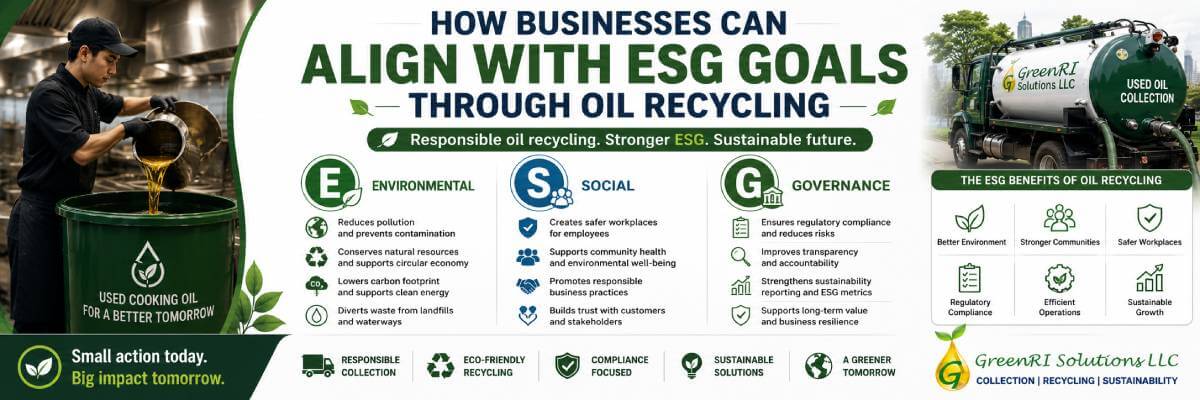
Leveraging Oil Recycling to Support ESG Objectives and Sustainable Growth
Environmental, Social, and Governance (ESG) initiatives have become a key focus for organizations across industries. Investors, customers, regulators, and stakeholders increasingly expect businesses to demonstrate measurable commitments to sustainability and responsible operations.
While many companies focus on energy efficiency, emissions reduction, and resource conservation, one area that is often overlooked is waste oil management.
Businesses that generate used cooking oil, used engine oil, or industrial oil waste have an opportunity to strengthen their ESG performance through responsible collection and recycling practices. By implementing structured oil recycling programs, organizations can reduce environmental impact, improve operational responsibility, and support long-term sustainability goals.
Understanding ESG and Why It Matters
ESG is a framework used to evaluate how businesses manage environmental, social, and governance responsibilities.
Environmental Factors
Focus on:
Social Factors
Focus on:
Governance Factors
Focus on:
Organizations that perform well in these areas are often viewed as more sustainable, responsible, and resilient.
The Environmental Impact of Improper Oil Disposal
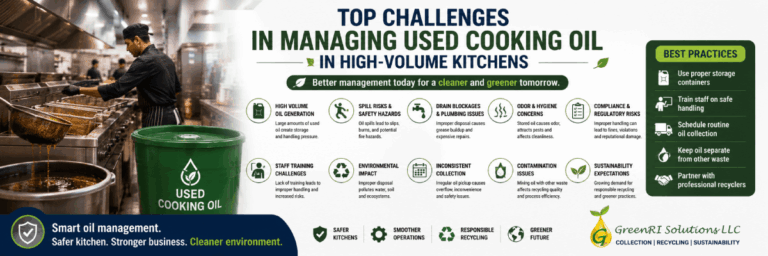
Waste oil generated by commercial kitchens, hotels, automotive workshops, manufacturing facilities, and food processing units can create significant environmental risks when handled improperly.
Poor disposal practices may result in:
These issues directly affect a company’s environmental performance and sustainability metrics.
Improper oil disposal contributes to Water Pollution, which can have long-term consequences for ecosystems and local communities.
How Oil Recycling Supports Environmental ESG Goals
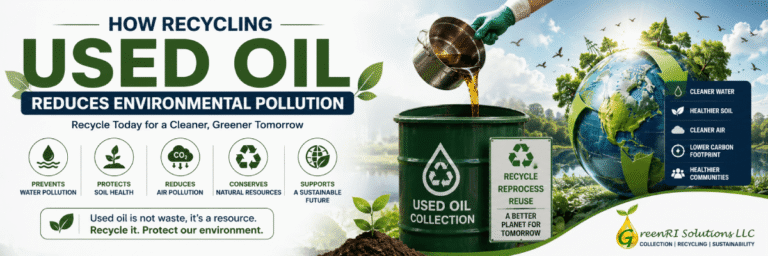
Reduces Environmental Pollution
Recycling prevents used oil from entering:
By diverting waste oil into recycling streams, businesses can significantly reduce their environmental footprint.
Supports Resource Conservation
Oil recycling enables valuable resources to be recovered and reused rather than discarded.
This reduces demand for:
Resource recovery is a key component of sustainable operations.
Helps Lower Carbon Footprint
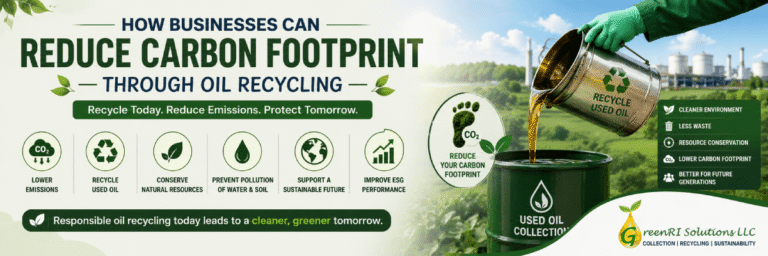
Responsible recycling programs contribute to reducing a business’s overall Carbon Footprint.
Benefits include:
These improvements can contribute directly to sustainability reporting and ESG initiatives.
Supports Circular Economy Principles
Oil recycling aligns closely with the concept of a Circular Economy, where materials are recovered, reused, and reintegrated into productive use.
Instead of treating oil as waste, businesses can support systems that maximize resource value and minimize environmental impact.
How Oil Recycling Supports Social ESG Goals
Improves Workplace Safety
Improper oil handling can create:
Structured oil management programs help maintain safer working environments for employees.
Demonstrates Community Responsibility
Businesses that recycle oil responsibly contribute to:
This helps strengthen relationships with customers, local communities, and stakeholders.
Promotes Sustainable Business Culture
Organizations that prioritize responsible waste management often foster greater environmental awareness among employees and partners.
This reinforces sustainability values throughout the business.
How Oil Recycling Supports Governance ESG Goals
Enhances Compliance Efforts
Waste oil handling is subject to various environmental regulations and industry standards.
Recycling programs help businesses:
Strengthens Risk Management
Poor waste handling can expose businesses to:
Structured recycling programs help mitigate these risks.
Improves ESG Reporting
Many organizations now publish sustainability and ESG reports.
Oil recycling initiatives can provide measurable contributions in areas such as:
These metrics can strengthen ESG disclosures and stakeholder communications.
Industries That Can Benefit from ESG-Focused Oil Recycling Programs
Restaurants and Commercial Kitchens
Used cooking oil recycling supports:
Hotels and Hospitality Businesses
Hotels can improve ESG performance through responsible management of kitchen-generated oil waste.
Automotive Workshops
Recycling used engine oil helps reduce environmental impact while supporting safer and cleaner operations.
Food Processing Facilities
Large-scale food manufacturers can improve resource efficiency and strengthen sustainability reporting through organized oil recycling programs.
Manufacturing and Industrial Operations
Industrial facilities generating lubricant and process oil waste can use recycling programs to support broader ESG objectives.
Best Practices for Implementing an Oil Recycling Program
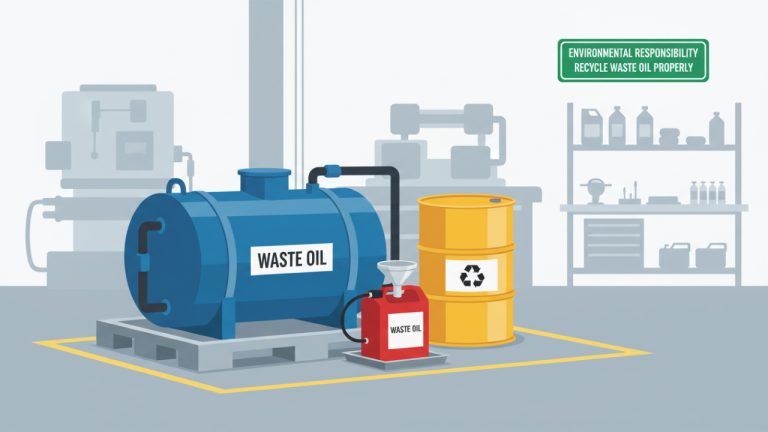
Establish Dedicated Storage Systems
Train Employees on Proper Handling
Provide guidance on:
Schedule Routine Collection
Regular collection helps:
Track Sustainability Performance
Monitor:
Tracking results can strengthen ESG reporting initiatives.
Partner with Experienced Recycling Providers
Working with a professional collection and recycling partner helps ensure oil is managed responsibly from collection through recycling.
Why ESG-Focused Businesses Are Prioritizing Oil Recycling
As sustainability expectations continue to rise, businesses are looking for practical and measurable ways to improve ESG performance.
Oil recycling provides a straightforward opportunity to:
Organizations that invest in responsible waste management often gain both operational and reputational benefits.
Encouragement to Explore Sustainable Waste Management Solutions
Aligning with ESG goals requires more than policies and commitments—it requires practical action.
Implementing a structured oil recycling program is a tangible step businesses can take to reduce environmental impact, improve operational responsibility, and support long-term sustainability objectives.
Strengthen Your ESG Initiatives with GreenRI Solutions LLC
Achieving meaningful ESG progress starts with responsible resource management and sustainable waste handling practices.
With GreenRI Solutions LLC, businesses can implement reliable used oil collection and recycling programs that support environmental responsibility and operational excellence.
Our services help organizations:
Whether you operate a restaurant, hotel, automotive workshop, food processing facility, or industrial operation, GreenRI Solutions LLC provides tailored oil collection and recycling solutions that help advance your sustainability goals.
Contact GreenRI Solutions LLC today to build a cleaner, more responsible, and ESG-focused approach to waste oil management.